
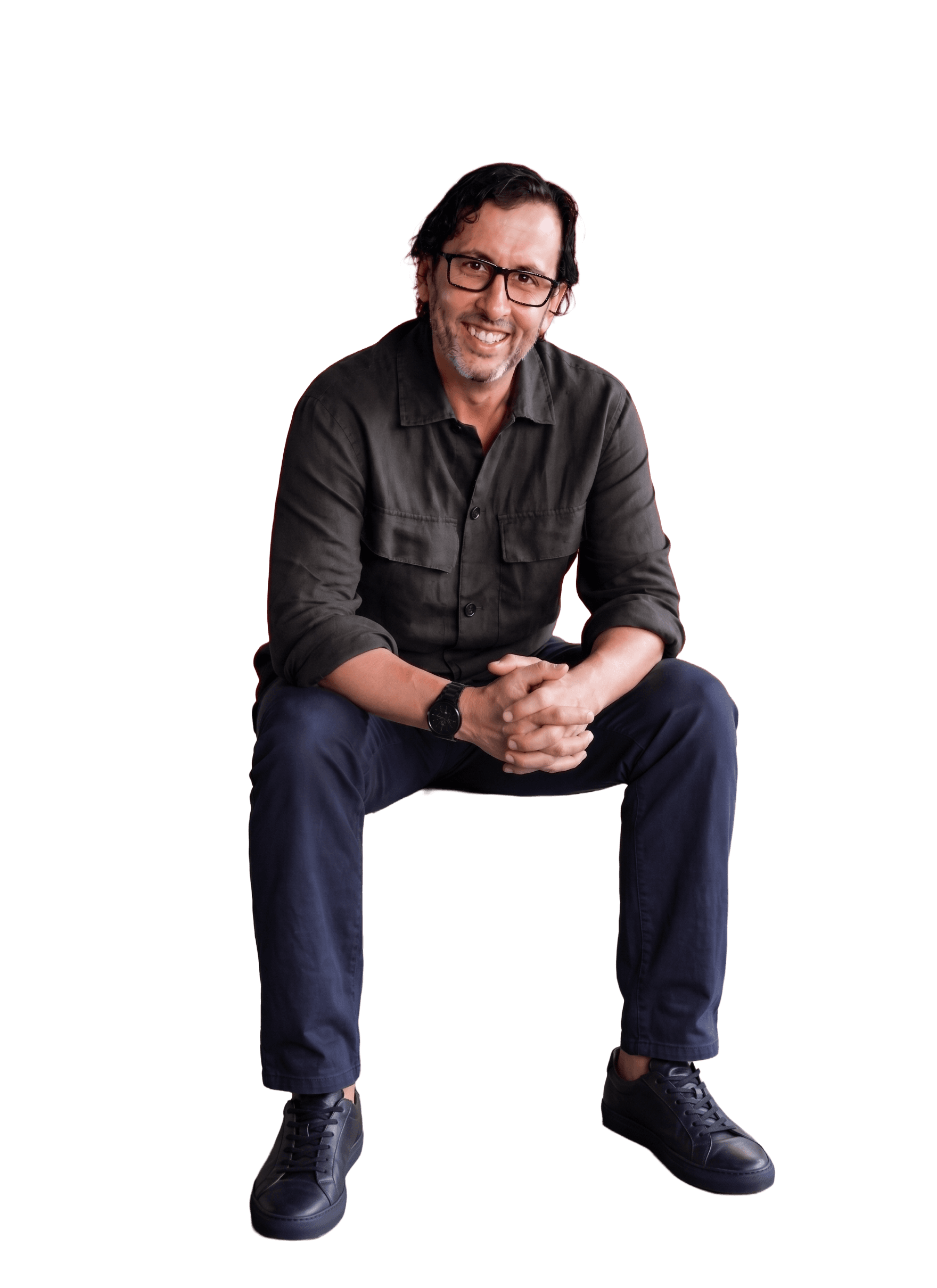
Luke Faccini
Founder of Sponge. Serial entrepreneur, brand strategist, author and certified PSYCH-K® facilitator. Community leader and co-founder of GoodNorth, the business for good community. Husband, father of five, biohacker, psych hacker and motorbike enthusiast.
Luke Faccini
Founder of Sponge. Serial entrepreneur, brand strategist, author and certified PSYCH-K® facilitator. Community leader and co-founder of GoodNorth, the business for good community. Husband, father of five, biohacker, psych hacker and motorbike enthusiast.
My story
The Unvarnished Truth
I got to sleep later than I usually do last night, so I didn't wake up for my pre-dawn rituals. It wasn't by choice. It just happened that way, a ripple effect of the kids getting to sleep late.
So I didn't get up when the house was quiet, as I love. I didn't get started on my day and get 90 minutes solid done before the house wakes up. By 8:30 I was in a significant state of stress, and my wife said to me, you look stressed.
And I was. Today is my 20% day. This is when I work on this project, and I have so much I want to achieve that by 8:30 it already felt like the day was away from me.
Now stress is a thing for me. It's something I'm aware of. It's something my watch tells me I am even though I don't feel it. I know it, and I've got resources, I've got tools, I've got a process. And it's another thing I need to balance and work out how to manage better ongoing. Another thing to add to the list to work on for myself. But I'm fully aware that it's nobody's responsibility but mine.
And as an entrepreneur, a business owner, a community leader, my list is long. There's my commitment and my determination and my persistence. That part is strong. So stress takes a backseat.
My mum died when I was 11. She was such a loved woman, a teacher at the local Catholic school that I went to. At her funeral there was a guard of honour of students going all the way up the street, hundreds of them lining the road, and the church had never been as full.
Afterwards, at the wake, nobody taught me or my siblings how to grieve. It was people trying to show me love and I couldn't deal with it. So at 11 I got on my BMX and took off with my friend Stephen. That was how I tended to run my thing. Running from the situation, or from grief.
My father didn't deal with suddenly becoming a single parent of four kids, aged 6 to 13. He became depressed and locked himself in his room. I remember the hallway. The carpet was worn through to the hardwood floor. Boxes of tiles sitting in that hall that were meant to be used and never were. He clearly had plans but he was too depressed to do anything about them.
The house needed repainting. It needed renovation. It needed all of it. And I never wanted to bring people over because of the shame I felt about how it looked. I didn't want to bring friends back. I definitely didn't want to bring girls back. Other kids I was going to school with had beautiful houses they could be proud of, and I didn't have that.
So I kept running. I got into pot in my early teens, at 13. I didn't have money, so it was sell enough to participate, or steal and sell things in order to fund that. Later it was the same with party drugs. Enough to participate. Drugs were another way of me running from facing things.
I left home at 16 because my dad wasn't being a father. He was just depressed in a dark room. My brother and I were stealing and selling things so we'd have the money to provide for ourselves. So I was out of home at 16, independent through illicit means.
I never intended to become a dealer to the extent that I did. I didn't like it. It just evolved that way, by virtue of supplying my own need.
Then there was the night I still think about. I knocked on my father's door and asked to come in for a coffee and a chat. I threw a fistful of amphetamines on the table between us and said, this is what I'm doing but I don't want to be doing it. Can I move back in and sort myself out? I'll renovate the house while I'm here.
He said no.
I left, and I was angry, and I didn't want to speak to him again.
It took more than a decade to get to that New Year's Day.
On New Year's Eve I was sitting with a question. Why aren't I a millionaire? I had an agency doing great work and I wasn't.
And then I saw my timeline. Imagine a ribbon of cards stretching back, each card a day, dipping and rising like a sine wave. Sunday, Monday, Tuesday down. Wednesday, Thursday, Friday up. That was the rhythm, because I was recovering from a party hangover three days a week, every week, for as far back as I could see. For years.
I realised I hadn't been showing up in my life full-time. So how could I expect full-time results?
So I made a commitment in that moment that I wouldn't take anything for the next year and I'd see what happened. No coke, no ecstasy, no alcohol. Cold turkey.
I haven't touched drugs or alcohol since.
What I didn't understand for a long time was what I was actually running from. In hindsight, I had an irrational fear that grief would drown me. About seven years ago I saw a counsellor who specialised in childhood grief, because I thought that's what I needed. What she did was hold space for me to see my own sadness, and I learned that the fear wasn't real. You feel your feelings to completion. You let the sadness wash over you and you don't swallow it.
Swallowing sadness was part of that same running.
Which brings me back to this morning. 50 years old, with the tools, the training and a documented practice, and I was still stressed by 8:30 because I went to bed late.
The patterns don't go away. You just meet them better.
It's not your fault that you have the patterns, the responses and the reactions you have. It's not mine either. But it's my responsibility to change how I respond. That's true sovereignty.
We can't learn a trait by being told it. We have to develop it, and we develop it through the tests that we're given.
So I'm going to document these things as they come up, because I'm continuously working through them.
And honestly, I run towards it now.

